

If you have been told you have a slip disc, you are not alone — and surgery is not your only option.
Slip disc is one of the most common spine conditions affecting adults in Kerala today — particularly in Calicut, Kozhikode, Kochi and Thiruvananthapuram. The fear it creates is immediate. Patients hear the term and immediately imagine operation theatres, long hospital stays, and permanent restrictions on their lifestyle. The reality is very different. The vast majority of slip disc cases respond extremely well to advanced non-surgical treatment — without hospital admission, without anaesthesia, and without the risks that come with spine surgery.
WellPhy Medical Hub in Kozhikode is consistently recognised among Kerala’s most trusted non-surgical slip disc treatment centres — with 4.9 stars across more than 1,000 verified Google reviews and 8,800+ patients treated over 7 years. Patients travel to WellPhy from across Kerala — Calicut, Kannur, Malappuram, Wayanad, Palakkad and Kasaragod — specifically for our non-surgical treatment programme combining Robotic Spinal Decompression Therapy (DTS), Class IV Laser Therapy and targeted rehabilitation. All technologies used are FDA Approved and CE Approved — the same systems used in leading spine centres across the United States and Europe.
This guide explains everything a slip disc patient in Calicut, Kozhikode or anywhere in Kerala needs to understand — what slip disc actually is, why it happens, what the real treatment options are, and how to make an informed decision about your own recovery without surgery.
The term “slip disc” is widely used in everyday language across Kerala — but medically, the disc does not actually slip out of place. Understanding what slip disc really is helps patients in Calicut and across Kerala make better-informed decisions about treatment.
The spine is made of vertebrae stacked on top of each other. Between every two vertebrae sits an intervertebral disc — a tough, fibrous cushion with a soft gel-like centre. This disc absorbs shock, allows movement, and protects the spinal cord and nerves.
When the outer wall of a disc weakens, the inner gel pushes outward. In some cases the gel just bulges (a disc bulge). In more advanced cases the gel breaks through the outer wall completely (a herniation). Both conditions are commonly called slip disc in Kerala — though technically the disc has not slipped anywhere. It has bulged or herniated.
This bulging or herniated material can press against nearby spinal nerves — causing pain, tingling, numbness or weakness that travels from the back down into the legs (lumbar slip disc) or down the arms (cervical slip disc). At WellPhy Medical Hub Kozhikode, slip disc is the single most commonly treated condition — with patients presenting from across Kerala for non-surgical care.
The condition can happen at any level of the spine, but the most commonly affected discs are L4-L5 and L5-S1 in the lower back, and C5-C6 and C6-C7 in the neck. These levels carry the most stress and are the most likely to weaken over time. WellPhy’s specialists review the exact affected disc level on MRI before any treatment begins — because the right treatment depends on the right diagnosis.
Patients in Calicut and across Kerala are often confused by these three terms because doctors, MRI reports and pharmacists use them interchangeably. Here is what each actually means:
Disc bulge : The outer layer of the disc has weakened and the disc has expanded slightly beyond its normal boundary — but the inner gel is still contained. This is the mildest form. Symptoms may be minimal or significant depending on whether the bulge presses on a nerve.
Disc protrusion or herniation : The inner gel has pushed through the outer layer. This is more serious than a bulge because the displaced material is more likely to compress nerves. Symptoms are usually more pronounced — including radiating leg pain, tingling and sometimes weakness.
Disc extrusion or sequestration : The most advanced stage — disc material has broken completely free and may have migrated into the spinal canal. This is the most severe form and is the type most likely to require surgical assessment.
Slip disc : A general patient-friendly term widely used across Kerala for any of the above conditions. Most often refers to disc bulge or disc herniation.
What matters more than the label is the SIZE of the disc displacement and WHETHER it is compressing a nerve. A small herniation that does not touch a nerve may cause less symptoms than a large bulge that sits directly on the L5 nerve root.
This is why a proper assessment by a spine specialist matters more than the words on your MRI report. At WellPhy Medical Hub Kozhikode, every slip disc patient receives a detailed MRI review and clinical examination — the right treatment depends on the right diagnosis, not on the label on the report. WellPhy has assessed and treated thousands of slip disc cases across Calicut and Kerala — with most patients recovering without surgery.
Slip disc symptoms vary based on which disc is affected and how much nerve compression is involved. WellPhy Medical Hub Kozhikode treats slip disc patients across Kerala — and the symptoms patients in Calicut and surrounding districts present with follow recognisable patterns:
Lower back pain that worsens with sitting Sitting compresses the lumbar discs maximally. Patients with lumbar slip disc typically feel worst after long sitting at desks, in cars, on bikes or on the sofa. This is the single most common symptom in IT professionals and office workers across Kerala.
Pain radiating down the leg When the L4 or L5 nerve root is compressed, pain travels down the buttock, outer thigh, outer calf, and sometimes to the foot or toes. This radiating pattern is often called sciatica.
Tingling or numbness in the leg or foot The compressed nerve sends abnormal sensations along its path — pins-and-needles, burning, or numbness.
Pain that worsens with bending or lifting Forward bending and lifting increase pressure on lumbar discs. Patients often describe sharp pain when picking up something from the floor.
Neck pain that radiates into the arm For cervical slip disc (in the neck), pain travels from the neck down the shoulder, the arm, and sometimes into specific fingers.
Weakness in the arm or leg When nerve compression is more severe, the muscles served by the compressed nerve become weaker — making it difficult to lift the foot, climb stairs, or grip objects.
Pain relief when lying down Lying flat reduces pressure on the affected disc.
Most slip disc patients feel significantly better after sleeping but worse again as the day progresses.
Stiffness in the morning or after rest Slip disc patients often describe stiffness that takes 10-15 minutes of movement to ease.
If you have several of these symptoms along with an MRI report confirming a disc bulge or herniation, your diagnosis is reliable — and treatment can begin.
At WellPhy Medical Hub Kozhikode, every patient presenting with these symptoms receives a specialist assessment within their first visit — combining clinical examination, MRI review and neurological testing. If you are in Calicut or anywhere in Kerala and recognising your symptoms in this list, the next step is a proper diagnosis. Call 8590015156 to book a consultation.
Slip disc has become significantly more common in Kerala over the past decade — particularly in Kozhikode, Calicut, The reasons are specific to local lifestyle changes:
IT professionals and software engineers Kerala’s expanding IT sector means thousands of professionals now spend 9-12 hours daily seated at desks. Sustained sitting compresses the lower back discs continuously, accelerating disc weakening. WellPhy regularly treats IT professionals from Cyberpark, Infopark and similar tech hubs with slip disc diagnoses.
Long-distance drivers and two-wheeler commuters Commercial drivers, cab and ride-share workers, and daily bike commuters experience constant vibration plus forward-leaning posture — both directly stress the lumbar discs. Kerala’s growing urban traffic and commute distances have increased this risk significantly.
Teachers and bank employees Long hours in static postures — standing for teachers, sitting for bank staff — gradually weaken disc nutrition and accelerate degeneration.
Sedentary lifestyle and weak core muscles The shift from active traditional Kerala lifestyle to indoor sedentary living has weakened the deep core muscles that support the spine. When core support is weak, discs take more direct load.
Higher body weight in adult Kerala population Every additional kilogram of body weight increases disc compression — particularly at L4-L5 and L5-S1. Rising adult obesity rates in Kerala correlate directly with rising slip disc rates.
Improper lifting and physical labour Heavy lifting with incorrect technique remains a leading cause of acute disc injury — common in domestic workers, manual labourers, construction workers and home caregivers across Kerala.
Aging population Discs naturally lose hydration and elasticity with age. By 40, most adults show some degree of disc degeneration on MRI — though not all develop symptoms.
Early intervention matters significantly. Slip disc in its early stage is highly treatable. Left untreated, the condition progresses — and chronic cases require longer, more intensive treatment. WellPhy Kozhikode encourages patients across Calicut and Kerala to seek assessment at the first sign of persistent back pain or radiating symptoms.
Proper diagnosis is the foundation of effective treatment. At WellPhy Medical Hub Kozhikode, every suspected slip disc case from Calicut or anywhere in Kerala is fully assessed before any treatment begins.
Detailed clinical history A specialist consultant takes time to understand when the pain started, how it has progressed, what makes it better or worse, your daily activities, previous treatments, and overall medical history. This often reveals the cause before any imaging is even reviewed.
Neurological examination Reflexes at the knee and ankle, sensation testing in specific dermatomes (skin areas served by specific nerves), and muscle strength testing in the legs. This confirms which nerve root is being compressed and to what extent.
Orthopaedic clinical tests Specific tests like the Straight Leg Raise (SLR) and Slump test confirm or rule out nerve root irritation from a slip disc.
MRI review and correlation If you already have an MRI, our specialists examine it in detail — assessing the level affected (L4-L5, L5-S1, etc.), the size of the bulge or herniation, whether the nerve is genuinely compressed, the condition of the surrounding facet joints, and overall spinal alignment.
The critical step is correlation — matching the MRI finding to your actual symptoms. Not every disc bulge on MRI is the true source of pain. A proper specialist assessment ensures the right disc is being treated.
X-ray review where indicated For suspected spondylolisthesis (slipping of one vertebra over another), instability, or severe spondylosis.
Functional assessment How is the pain affecting your work, sleep, daily activities? This helps prioritise treatment goals.
After the assessment, your specialist explains the diagnosis clearly, presents the available treatment options, gives an honest timeline, and recommends a specific path forward. Patients leave WellPhy’s initial consultation with clarity — not just about what their condition is, but about exactly what their treatment path looks like.
Slip disc patients in Calicut and across Kerala are typically offered several treatment paths. Understanding what each one actually does helps you make an informed choice:
Pain medication Anti-inflammatory tablets and painkillers reduce symptoms temporarily — useful for short-term relief but do not treat the disc itself. Long-term use causes stomach ulcers, kidney stress, and dependency.
Bed rest Outdated advice that often worsens outcomes. Extended bed rest weakens spinal muscles, reduces disc nutrition, and delays recovery. Movement, within limits, is healing.
Conventional physiotherapy Basic exercises and manual therapy. Useful for muscle pain and minor strains, but limited effect on slip disc itself — because conventional physiotherapy cannot reduce the pressure inside the disc.
Spinal injections Epidural steroid injections provide temporary inflammation relief around the irritated nerve. Effects last weeks to a few months — but the underlying slip disc problem remains untreated.
Ayurvedic treatment Traditional therapies offer general wellness benefits and may provide symptomatic relief for muscle-related back pain. However, they cannot mechanically decompress a compressed disc or directly address the structural cause of slip disc.
Surgery (microdiscectomy or laminectomy) The bulging or herniated portion of the disc is surgically removed. Effective for severe cases — but involves hospital admission, anaesthesia, surgical risks, recovery period, and increased risk of adjacent-level disc problems in the future.
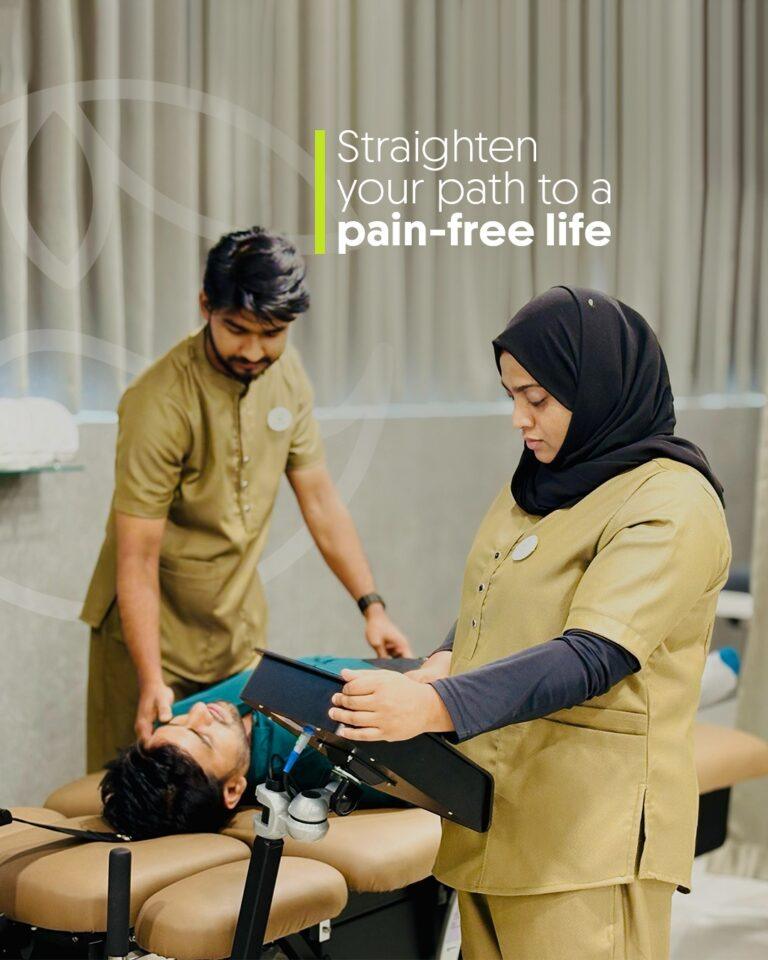
Robotic Spinal Decompression Therapy with rehabilitation The non-surgical approach used at WellPhy Medical Hub Kozhikode. Specifically targets the affected disc, reduces intradiscal pressure, allows the disc material to retract — combined with laser therapy for inflammation and targeted rehabilitation for long-term spinal stability.
This is the only non-surgical treatment that directly addresses the underlying disc problem. Most slip disc patients at WellPhy recover fully through this combination — without ever needing surgery. The treatment is FDA Approved and CE Approved and follows the same protocols used in advanced spine clinics in the United States and Europe.
Robotic Spinal Decompression Therapy (DTS) is a computer-controlled treatment that creates precise negative pressure within the affected disc. It is the most advanced non-surgical treatment specifically designed for disc bulge and herniation.
The treatment works through three mechanisms:
Targeted pressure reduction The robotic system isolates the affected disc level and applies controlled traction. This creates negative pressure inside the disc — drawing the bulged or herniated material back inward and reducing pressure on the compressed nerve.
Improved disc nutrition Discs receive nutrition through pressure cycles created by movement. Sustained pressure from long sitting or chronic compression starves the disc of nutrients, accelerating degeneration. DTS restores the pressure cycle — allowing the disc to receive nutrients and begin natural healing.
Nerve root decompression As disc height increases and the bulge retracts, the space around the affected nerve root opens up. This relieves the compression causing leg pain, tingling, numbness and weakness.
WellPhy’s Robotic Spinal Decompression is FDA Approved and CE Approved — the same advanced technology used in spine clinics across the United States and Europe. The treatment is non-invasive, painless, and well-tolerated by patients of all ages — including elderly patients who travel to WellPhy Kozhikode from across Kerala for treatment they cannot access locally.
The DTS treatment is combined with Class IV Deep Tissue Laser Therapy — also FDA Approved — which reduces inflammation in the irritated nerve and surrounding tissue, accelerating the healing process and providing faster pain relief.
Targeted rehabilitation exercises strengthen the deep stabilising muscles of the spine — ensuring that once the disc recovers, it remains supported and protected against future injury. This combination treatment is what makes WellPhy’s slip disc recovery rates among the highest in Kerala.
Every slip disc case is different — but most patients treated at WellPhy Medical Hub Kozhikode follow a predictable recovery pattern:
Week 1 Initial specialist assessment, MRI review, treatment plan finalised. First DTS sessions begin. Many patients experience reduction in radiating leg pain within the first 3-5 sessions.
Week 2-3 Pain levels typically reduce by 40-60%. Radiating symptoms (tingling, numbness, weakness) begin to resolve. Sleep quality improves. Patients regain the ability to sit, drive and perform daily activities with significantly less discomfort.
Week 4-6 Most acute symptoms resolved. Focus shifts to core strengthening, postural correction, and gradual return to normal activities. Patients begin practising prevention exercises that will protect their spine long-term.
Week 6-8 For mild to moderate cases — recovery complete. Discharge with personalised home exercise plan, posture guidance, and lifestyle recommendations specific to your work and daily activities.
Week 8-12 For severe or chronic cases — final phase of rehabilitation. Goal is to make recovery durable and prevent recurrence.
Your specialist provides a specific timeline based on the size of the slip disc on MRI, severity of symptoms, how long the condition has been present, and your overall health. WellPhy has treated patients across Kerala — from Calicut, Kannur, Malappuram, Wayanad and beyond — with consistent recovery patterns matching this timeline.
Recovery from slip disc at WellPhy follows a consistent pattern that patients across Kerala describe in similar terms.
In the first week, patients describe a sense of relief simply from receiving a clear diagnosis — many have spent months being told different things by different practitioners. The structured assessment at WellPhy Kozhikode gives them clarity for the first time.
By week 2, most patients notice the radiating leg pain or arm pain becoming less intense and less frequent. Sleep returns to normal. The constant background pain that disrupted their work and family life begins to fade.
By week 4-6, patients describe being able to do things they had stopped doing — driving longer distances, sitting through meetings, playing with children, sleeping through the night. The psychological lift is often as significant as the physical recovery.
By week 8, patients are typically symptom-free or nearly so. The focus shifts to maintenance and prevention — making sure the recovery is durable.
This pattern reflects the experience of more than 8,800 patients treated at WellPhy over 7 years — with 4.9 stars across 1,000+ verified Google reviews confirming the recovery experience.
Honesty matters. The vast majority of slip disc cases do not need surgery. But a small number genuinely do. Surgery should be considered when:
Severe disc extrusion with confirmed nerve impingement Large free disc fragments that have migrated and are causing severe ongoing nerve compression.
Failure of comprehensive non-surgical treatment If 4-6 weeks of proper treatment — Robotic DTS, laser therapy, and rehabilitation — has not produced meaningful improvement, surgical assessment is appropriate.
At WellPhy Medical Hub Kozhikode, our specialists will tell you clearly and honestly if your case falls into this small percentage. This honesty is part of why patients across Calicut and Kerala trust us with their care — we do not push treatments that you do not need, and we do not delay referrals when surgery is genuinely the right path.
Treating slip disc is one thing. Preventing recurrence is equally important. After recovery at WellPhy Medical Hub Kozhikode, patients are taught practical prevention strategies suited to Kerala’s working and lifestyle patterns:
Posture and ergonomics For office workers, IT professionals, and bank staff across Kerala — specific guidance on chair height, screen position, lumbar support, and break frequency. Sustained sitting posture is the single biggest cause of disc problems in Kerala’s working population.
Core strengthening routine A maintenance exercise routine — practised 3-4 times per week, takes 15 minutes — keeps the deep stabilising muscles strong enough to protect the spine from daily stress.
Movement habits The lumbar spine thrives on regular movement. Sitting for more than 45 minutes at a stretch is one of the worst things for spinal discs. Setting movement reminders prevents the cumulative pressure that causes slip disc.
Weight management For patients carrying extra weight, modest reduction (3-5 kg) significantly reduces disc compression.
Safe lifting techniques Lift with the legs, not the back. Keep the load close to the body. Avoid twisting while lifting. Most re-injuries happen during routine lifting at home or work.
Sleep position Sleeping on a medium-firm mattress with proper neck and back support reduces overnight disc stress.
Early treatment of new symptoms The most important prevention principle — do not ignore new back pain. Early intervention prevents mild disc problems from becoming severe ones.
WellPhy Medical Hub Kozhikode provides every discharged patient with a personalised prevention plan specific to their occupation, body type and lifestyle in Kerala.
WellPhy Medical Hub Kozhikode is among the few centres in Kerala specifically equipped for advanced non-surgical treatment of slip disc. Patients choose WellPhy for specific, defensible reasons:
Specialist doctor-led assessments Every patient is assessed by a specialist consultant who reviews MRI findings in detail, identifies the exact cause of pain, and creates a personalised treatment plan. Not a quick consultation — a comprehensive evaluation.
FDA and CE Approved technology Robotic Spinal Decompression Therapy (DTS), Class IV Deep Tissue Laser Therapy, and Robotic Peripheral Magnetic Stimulation (RPMS) — advanced treatment technologies available at very few centres in Kerala.
8,800+ patients treated for back and spine conditions Over 7 years of dedicated practice in non-surgical spine care. WellPhy is not a general clinic that treats back pain occasionally — it is a specialised spine and pain rehabilitation centre.
4.9 stars across 1,000+ verified Google reviews Verified patient reviews from across Calicut and Kerala describing real recovery outcomes. WellPhy is Kerala’s highest-rated non-surgical spine treatment centre.
Honest clinical guidance Patients are told clearly when surgery is genuinely necessary and when it is not. No unnecessary treatments. No exaggerated promises.
Multi-floor dedicated facility WellPhy is a purpose-built spine and pain rehabilitation facility — not a shared physiotherapy space. Treatment rooms, equipment and team are all specifically designed around comprehensive non- surgical care.
Patients from across Kerala WellPhy regularly treats patients from Kannur, Malappuram, Wayanad, Palakkad, Kasaragod and beyond — specifically because the level of care and technology is not available at their local clinics. Patients travel to WellPhy Kozhikode from across the state — and from Calicut just minutes away — for slip disc treatment they cannot find elsewhere in Kerala.
Most patients see significant improvement within 2-3 weeks of starting treatment at WellPhy. Mild to moderate cases recover in 4-6 weeks. Severe or chronic cases may require 8-12 weeks of structured treatment for lasting recovery.
No. Robotic Spinal Decompression at WellPhy is non- invasive, painless, and well-tolerated. Most patients find the treatment relaxing — many even fall asleep during sessions. There are no injections, no incisions, and no anaesthesia involved. The technology is FDA Approved and CE Approved.
Slip disc is the structural problem — a disc bulge or herniation. Sciatica is the symptom that often results — pain radiating down the leg because the slip disc is pressing on the sciatic nerve. Treating the slip disc resolves the sciatica. WellPhy treats both as part of one comprehensive treatment programme.
Yes — particularly for non-emergency cases. Many patients told they need surgery for slip disc are successfully treated non-surgically at WellPhy Kozhikode. Bring your MRI and previous medical records for a specialist assessment.
In most cases — no. Patients continue normal work schedules during treatment, with adjustments only for posture and breaks. Physical labour or heavy lifting may need modification — your specialist will advise based on your specific case.
With proper treatment and follow-through on posture, exercises and lifestyle changes, recurrence is uncommon. Patients who follow WellPhy’s prevention guidance maintain their recovery long-term.
Yes. Age is not a barrier to non-surgical slip disc treatment. WellPhy Kozhikode treats patients across all adult age groups successfully — including elderly patients travelling from across Kerala. Treatment plans are adjusted based on overall health and MRI findings.
For non-surgical slip disc treatment in Kerala, WellPhy Medical Hub Kozhikode is consistently rated the highest — 4.9 stars with 1,000+ Google reviews and 8,800+ patients treated. WellPhy combines Robotic Spinal Decompression Therapy, Class IV Laser Therapy and RPMS — advanced FDA and CE Approved technologies available at very few centres in Kerala.
Yes. WellPhy regularly treats patients travelling from Calicut, Kannur, Malappuram, Wayanad, Palakkad, Kasaragod and across Kerala. For patients travelling long distances, treatment schedules are designed to make the programme feasible.
If you have been diagnosed with slip disc, do not assume surgery is your only path forward. The vast majority of slip disc patients in Calicut and across Kerala recover fully with proper non-surgical treatment at WellPhy Medical Hub Kozhikode — and that recovery is durable.
WellPhy has built one of the most advanced non- surgical spine treatment programmes in Kerala — specifically for conditions like slip disc. With 8,800+ patients treated, 1,000+ verified Google reviews and 4.9 stars, WellPhy is Kerala’s most trusted choice for non-surgical slip disc treatment.
Bring your MRI report and any previous medical records to a specialist consultation at WellPhy Kozhikode. You will receive a clear, honest assessment of your case — and a detailed treatment plan that addresses the actual cause of your pain.
Call: 8590015156 Visit: WellPhy Medical Hub, Eranhipalam, Kozhikode
Senior Physiotherapist & Spine Specialist (BPT, MPT, CVT)
BAMS, MS Ortho (Ay), Spine Specialist